Article II — The Labyrinth Within: When the Psyche Builds Its Own Minotaur
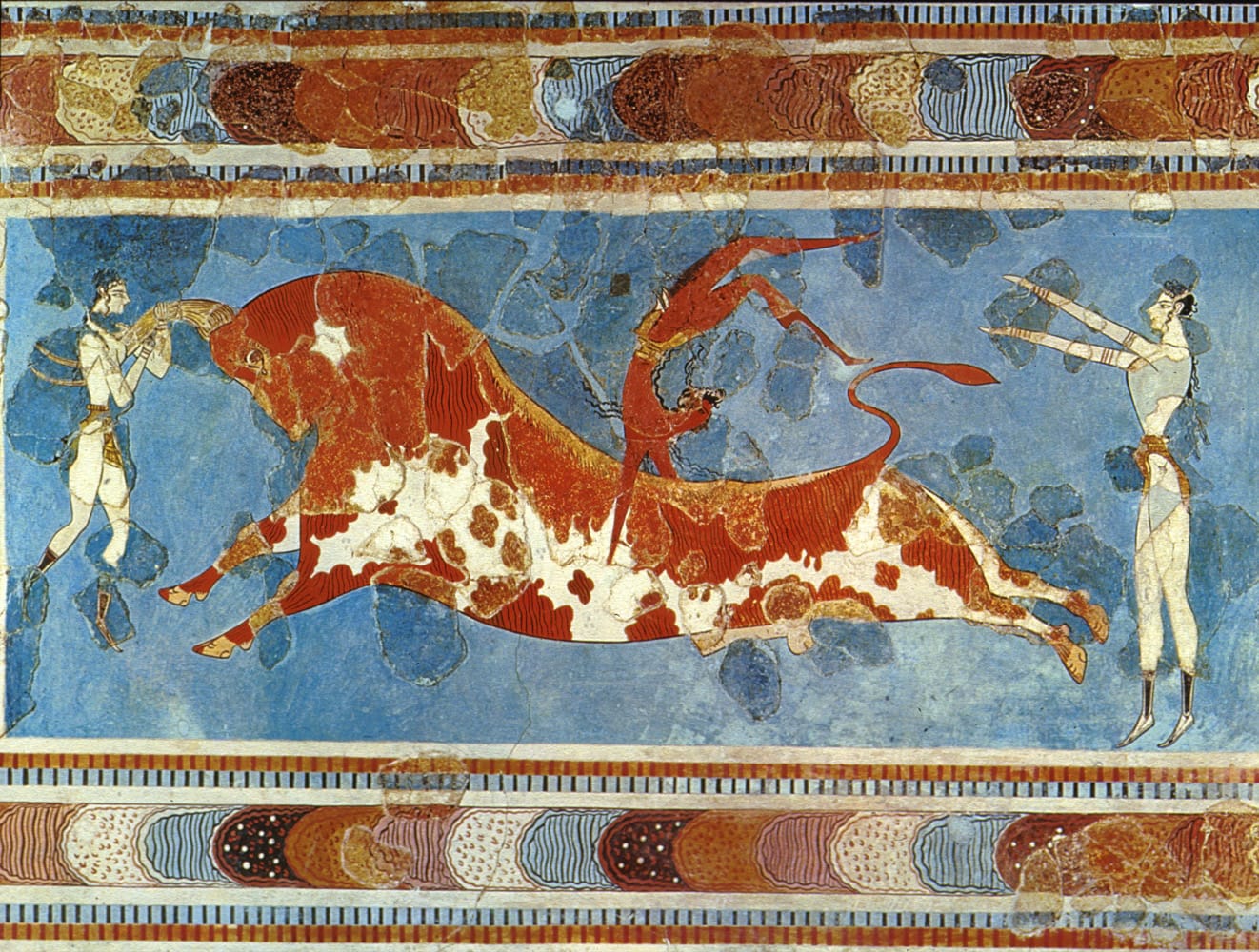
There are moments in clinical work when the presenting symptom is not the true subject.
The anxiety, the compulsion, the spiritual fixation—these are often only the outer architecture. What we encounter, if we remain present long enough, is something older, more structured, and strangely intentional.
A labyrinth.
Not as metaphor alone, but as a lived psychic reality.
The Constructed Labyrinth
The psyche, when overwhelmed by contradiction, does not collapse immediately. It organizes.
It builds corridors of belief, narrative, and identity to contain what cannot yet be integrated. These corridors are rarely random. They are precise, often elegant, and deeply protective.
In transpersonal terms, we might say the ego is attempting to mediate forces that exceed its symbolic capacity.
When this mediation fails—not catastrophically, but subtly—the psyche does something remarkable:
It displaces the unresolved tension into form.
That form becomes the labyrinth.
The Birth of the Minotaur
At the center of this structure, there is often a presence.
Not an entity in the literal sense, but an autonomous psychic configuration. It appears with qualities of otherness—alien, archaic, sometimes monstrous.
Across cultures, this has been described differently. In clinical language, we might speak of dissociated complexes or archetypal constellations. In myth, it is simpler:
The Minotaur.
What defines this presence is not malevolence, but compression. It is the density of everything that could not be metabolized:
- Instinct without integration
- Desire without symbolization
- Power without relationship
It is not evil. It is unprocessed life.
Modern Pathways Into the Labyrinth
In contemporary contexts, the labyrinth is rarely built through mythic ritual or cultural initiation. Instead, it emerges through abstraction.
When individuals orient themselves excessively toward systems that bypass embodied experience—whether astrological determinism, rigid spiritual cosmologies, or dissociated metaphysical frameworks—the psyche can become ungrounded.
This is not a critique of those systems themselves, but of their use as totalizing structures.
The result is a subtle inversion:
Instead of using symbolic systems to deepen contact with reality, reality is filtered through the system.
At that point, the person is no longer navigating the world.
They are navigating a labyrinth of their own symbolic construction.
And at the center, something begins to form.
Clinical Encounter: Not Confrontation, but Orientation
When the Minotaur appears in the therapeutic field, the instinct—especially for the inexperienced—is to confront, interpret, or dismantle.
This is rarely effective.
The Minotaur does not dissolve under analysis, because it is not sustained by belief alone. It is sustained by structural necessity.
To remove it prematurely is to collapse the labyrinth.
And the labyrinth, however limiting, is still serving a function: it is containing what would otherwise overwhelm the system.
The task, then, is not to slay the Minotaur.
It is to introduce Ariadne’s thread.
Ariadne’s Thread: The Function of Presence
In myth, the thread does not destroy the labyrinth. It makes it navigable.
Clinically, this thread is presence—consistent, grounded, non-reactive awareness that does not become entangled in the symbolic complexity of the client’s world.
It is not interpretation.
It is not agreement.
It is not opposition.
It is orientation.
Through this, something subtle begins to happen:
The client no longer needs the labyrinth to hold everything.
Experience starts to move again.
The Transformation of the Minotaur
When the psyche is no longer required to contain its contradictions through rigid structure, the Minotaur begins to change.
Not vanish—transform.
What was once experienced as monstrous reveals its original function:
It was guarding something.
Often, this is vitality itself—raw, instinctual life force that could not be safely integrated at the time of its emergence.
In this sense, the Minotaur is not the problem.
It is the threshold.
Sofia and the Return to Wisdom
From a gnostic perspective, we might understand this entire process as a fragmentation of Sophia—wisdom dispersed into multiplicity, attempting to remember itself.
The labyrinth is the forgetting.
The Minotaur is the distortion.
The thread is the beginning of remembrance.
And therapy, at its most refined, is not the imposition of order, but the quiet facilitation of this remembering.
Closing Reflection
There is a discipline required in this work.
To not literalize what appears.
To not dismiss what is felt.
To not collapse into either belief or reduction.
To stand, instead, at the threshold—with the Minotaur, within the labyrinth—and hold a quality of presence that allows something older than pathology to re-emerge.
Not as symptom.
But as life, finally able to mov